Reagan had worked in the entertainment industry. So did Trump. Reagan was close to the Democrats for a long time before making a turn to the right. Same with Trump. Both had many strange, very close contacts to people with a Eastern-European and Russian background. Both followed a strong foreign policy as presidents.
Almost all observers, including the conspiracy cranks, didn’t truly know what to make of these two. Their environments were heavily influenced by people whose history is partially buried in the chaos of Europe, the late Russian tsarist empire and the USSR. Eurasian territory, from Lisbon (Portugal) to Wladiwostok, has always been a den of spies. Untangling this mess is the only way to have freedom and independence in the US.
Americans really don’t like having America explained to them by foreigners. It’s regarded as highly insulting. I’m a German with family in North Carolina and the New Jersey area. My cousin worked for the FDNY during 9/11. Instead of glorifying messy, secretive European countries and patronizing US citizens, I would rather offer assistance in counterintelligence. President Donald Trump’s own grandfather was born in Bavaria, Germany. Donald is in trouble for his past socializing with Jeffrey Epstein whose parents were jews from Poland and Lithuania. The emphasis is on Polish and Lithuanian. The jewish factor is a sidenote. Jews and non-jews in Europe and Russia were under control by different empires which has significant espionage capabilities.
Many additional powerful individuals in the Trump administrations and in his business and private circles have European roots like this. It’s not a long drive for me if I wanted to visit Poland or Lithuania (the Baltics). Due to arrests over the last years and TV shows more Americans have become familiar with the phenomenon of the sleeper agents. This is when a government recruits and trains individuals in spycraft, gives them false identities and has them migrate from place to place until they reach the tagret country. Each step in the migration chain has a certain time span to make the lives of the sleepers seem believable. Fake marriages are arranged and these couples have real children who will eventually be recruited by their own parents. Record keeping in Europe was often sketchy. Falsifying papers and stealing the identities of people who prematurely died was easy.
Everyone wanted to get a piece of America.
The networks that made Reagan
Ronald Reagan earned a Bachelor of Arts in economics and sociology from Eureka College in 1932. Eureka’s alumni list includes dozens of college and university presidents, several governors and members of Congress, and—most famously—Reagan himself, the future 40th President of the United States. While at Eureka, Reagan joined the fraternity Tau Kappa Epsilon, a detail that is easy to overlook. The member badge looked like Nazi SS insignia or the iconography of the Yale secret society Skull&Bones.
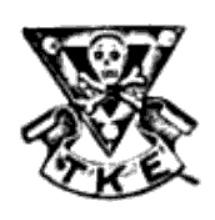
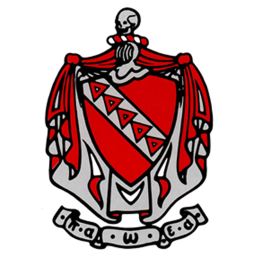
They even had a coat of arms comparable to European aristocracy.
The original name was “Knights of Classic Lore”. During formation, the Knights of Classic Lore were trying to get the Illinois Epsilon chapter of Phi Delta Theta restored. The very powerful Phi Delta Theta had a restrictive clause barring membership to African Americans, Asians, Jews, and Muslims.
The mythological ideal or patron of Tau Kappa Epsilon is Apollo, an important and complex Olympian deity in Greek and Roman mythology.
Tau Kappa Epsilon is also affiliated with the German fraternity system known as the Corps of the Weinheimer Senioren-Convent (WSC). That is the second oldest German student society association, founded in Frankfurt, Hessen, center of one of the most powerful aristocratic dynasties in history with members ruling the British empire or tsarist Russia. Americans may remember mercenaries from Hessen fighting the rebels in the American Revolutionary War. The House of Hessen had recruited the Rothschild family for a banking front organization. Every conspiracy buff and almost all Muslims today believe the Rothschilds took over the word. Almost nobody today knows about the House of Hessen.
Besides Reagan other widely recognized political figures from TKE include former West Virginia Senator Robert Byrd, who at the time of his death was the longest-serving member in the history of the United States Congress, and former Arkansas Governor and Republican presidential candidate Mike Huckabee.
Dozens of top CEOs and university presidents have also made the list such as Howard Schultz of Starbucks, Marc Benioff of Salesforce, and Steve Forbes of Forbes magazine.
The greek letter fraternities are not really an American tradition. It’s a mix of ancient Greek mystery cults mixed with German-aristocratic structures of Welfs, Wettins and Reginars.
From the Midwest to the microphone
After graduation, Reagan built a career as a sports broadcaster, developing the voice, timing, and performance discipline that would later become part of his political identity. Broadcasting also trained him in a skill that few politicians master: the ability to sound spontaneous while working from a mental script—improvisation inside a prepared structure.
Hollywood: entry, elevation, and the studio system
Reagan’s move into film was not simply a leap of talent; it was also a navigation of institutions. A screen test led to a seven-year contract with Warner Bros., and he arrived in Hollywood in 1937. The studio era was a tightly controlled ecosystem: contracts, publicity, casting, and career trajectory were managed less by artistic freedom and more by corporate gatekeepers, agents, and financiers.
A key figure in the transformation of Hollywood power was Lew Wasserman, widely described as one of the most influential dealmakers in the industry—“the last of the legendary movie moguls” and arguably the most powerful Hollywood figure in the decades after World War II. Wasserman renegotiated Reagan’s contract in ways that opened additional opportunities, including the ability to make films with Universal, Paramount, and RKO as a freelancer rather than being locked into one studio arrangement. Wasserman was also a major political fundraiser and an influential player in Democratic Party circles—illustrating how entertainment, money, and politics often share overlapping networks.
Wasserman was born to a Jewish family in Cleveland, Ohio, the son of Isaac Wasserman and Minnie Chernick, both emigrants from Russia.
Wasserman’s close friend Jack Valenti, son of Italian immigrants, represents another bridge between media and state power. Valenti served as a Special Assistant to President Lyndon B. Johnson and later became the longtime head of the Motion Picture Association of America (MPAA). His background—combat service as a bomber pilot in World War II, decorated for valor and endurance—gave him credibility in both patriotic and political circles, and later allowed him to become a dominant institutional player in Hollywood’s relationship with Washington.
Hollywood’s financial backers: Wall Street enters the picture
Even the biggest studios were not purely “creative empires.” As the major studios grew, they increasingly relied on Wall Street finance. Warner Bros.—founded by the Polish jews Harry, Albert, Sam, and Jack Warner—expanded into a world where major banks could underwrite growth.
In 1924, Goldman Sachs arranged a major loan for the studio, a reminder that American entertainment power quickly became inseparable from American financial power. Marcus Goldman, the firm’s founder, was a German Jewish immigrant who arrived in the United States in the mid-19th century.
For the common conspiracy activists and most Muslims, the jewish background of these individuals meant they were working for the mother-lodge of the “Elders of Zion”. But once you understand European history you know that the empires here were fiercly paranoid about ANYTHING that could potentially undermine them. Even 10.000 years ago the first real empires in Mesopotamia understood that imperialism is based on the best possible allocation of resources. And that allocation only works if you acquire enough information (intelligence) about your own population and about your enemies, while shielding your own secrets of how you allocate.
Individuals in Europe, jewish or not, had no meaningful power whatsoever. At best they could get recruited by the aristocracies and perform tasks as ordered. So when you hear or read “jew from Poland” or “jew from Germany” or “jew from Lituania”, you don’t automatically know whom you are dealing with, what network this person was potentially working for or what level of insight this person actually posessed while performing tasks and missions for a handler.
War service and the public-relations state
In April 1937, Reagan enlisted in the United States Army Reserve. During World War II he served as a public relations officer in the Army Air Forces, producing hundreds of training films. This is another quietly formative chapter: Reagan became familiar with the machinery of institutional messaging—how states speak to large populations through images, scripts, and carefully designed narratives.
Labor politics, the Screen Actors Guild, and the Cold War stress test
When actor Robert Montgomery resigned as president of the Screen Actors Guild (SAG) on March 10, 1947, Reagan was elected to the position in a special election. This placed him at the center of a collision between labor politics, studio power, and Cold War ideology.
The Hollywood blacklist era is crucial background here, because it demonstrates how “loyalty,” fear, and institutional survival tactics can distort a whole industry. The blacklist was often informal—rarely explicit, hard to verify, and enforced through employment denial rather than transparent legal proceedings.
The most famous flashpoint involved the Hollywood Ten—ten left-leaning screenwriters and directors cited for contempt of Congress after refusing to answer questions before the House Un-American Activities Committee (HUAC). Those ten were: Alvah Bessie, Herbert Biberman, Lester Cole, Edward Dmytryk, Ring Lardner Jr., John Howard Lawson, Albert Maltz, Samuel Ornitz, Adrian Scott, and Dalton Trumbo.
Some of these figures had Communist Party associations; many were children of immigrants or came from immigrant communities, and several were Jewish. All of this made background checks for possible sleeper cell activities really difficult.
Reagan’s role in this climate remains controversial. The FBI interviewed him, and he provided names of actors he believed to be Communist sympathizers. In a HUAC appearance, Reagan testified that some guild members were associated with the Communist Party and that he was informed about labor disruption and alleged jurisdictional agitation. When asked about Communist efforts inside the Screen Writers Guild, he characterized parts of what he had heard as “hearsay.”
Eventually Reagan left SAG leadership, but the experience likely contributed to his later political evolution: he learned how quickly institutions can fracture under suspicion, and how political systems reward confident moral framing.
Nancy Reagan, cultural networks, and a strange corner of elite decision-making
Reagan’s second wife, Nancy Reagan, had her own web of cultural connections. A striking detail sometimes mentioned in biographies is that the Russian-born actress Alla Nazimova was Nancy’s godmother. Nazimova was renowned for her work in Ibsen, Chekhov, and Turgenev, became one of the highest-paid actresses in the U.S., and later gained renewed attention for avant-garde artistic influence and early queer cultural history. She created the Garden of Alla Hotel, a celebrity refuge. The broader point is less about Nazimova herself and more about how Hollywood’s social world has always been internationally entangled—Russian, European, and American artistic circuits constantly overlapping.
Nancy Reagan also became known for consulting a San Francisco astrologer, Joan Quigley, during Reagan’s presidency—an unusual example of how informal belief systems can creep into elite decision routines, even at the highest levels.
And on the geopolitical front, Nancy Reagan strongly encouraged her husband to pursue summit diplomacy with Soviet leader Mikhail Gorbachev, urging the development of a personal relationship as a foundation for negotiation—again illustrating how modern statecraft is often a blend of institutional strategy and interpersonal psychology.
Reagan’s political shift: Democrat to conservative icon
Reagan began his political life as a Democrat, admiring Franklin D. Roosevelt as “a true hero.” The Roosevelt family traces its roots to Claes Maartenszen van Rosenvelt, a Dutch immigrant who arrived in New Amsterdam (now New York City) in the mid-17th century. The aristocratic House Orange-Nassau controlled Holland, invaded England and took the crown.
Reagan also worked with the AFL–CIO to oppose right-to-work laws, aligning with mid-century labor liberalism.
Over time he shifted to the right, supporting the presidential campaigns of Dwight D. Eisenhower in 1952 and Richard Nixon in 1960. This evolution is often described as ideological, but it was also institutional: Hollywood labor politics, anti-communist networks, and corporate media worlds created pathways in which conservative politics became increasingly compatible with Reagan’s skills and rising identity.
The presidency: hard power, pressure, and bargaining with the Soviet system
As president, Reagan’s Cold War posture was defined by a willingness to apply pressure through military buildup and strategic constraint.
He ordered a major defense expansion, revived the B-1 Lancer program, deployed the MX missile, and responded to Soviet deployment of the SS-20 by overseeing NATO’s deployment of Pershing missiles in Western Europe. In 1982, he attempted to restrict the Soviet Union’s access to hard currency by impeding the proposed natural gas pipeline to Western Europe—an effort that strained relations with European allies who expected economic benefits, and which was later softened.
In March 1983, Reagan announced the Strategic Defense Initiative (SDI), envisioned as a missile-defense shield against intercontinental ballistic missiles. Whether one views SDI as realistic engineering or strategic bluff, its political purpose was clear: reshape the Soviet cost calculus and raise the price of continued arms competition.
Reagan’s administration also supported covert aid to the Afghan mujahideen through Pakistan in the war against Soviet forces—often credited as one of several factors contributing to the eventual Soviet withdrawal from Afghanistan.
How Reagan’s world worked
Reagan’s ascent was not a solo miracle. It was a climb through institutions—college networks, broadcasting, the studio system, agents and moguls, labor unions, federal wartime propaganda infrastructure, and Cold War political coalitions. Likewise, the people around him—Wasserman, Valenti, studio founders, financiers, and later diplomatic and cultural intermediaries—illustrate how modern power isn’t held by one class alone. It circulates through media, finance, politics, and bureaucracy, forming overlapping webs that can appear chaotic from the outside but function with surprising consistency inside.
